- Refining VC
- Posts
- Repeat Yourself

There's an old man I see on my walk to my office.
Each time, I say hello. Each time, he has no idea who I am.
I know this because once his dog got lost in my garden. When his carer came to retrieve it, she explained, he has severe memory loss.
Now there's this beautiful ritual where I get to introduce myself again and again. I know who he is. He never remembers me.
This happens every week.
The reason I tell you this story is because this, my friends, is exactly who you are in the market.
You think people remember your last post, your big announcement, your clever deck. They don’t. Every time you show up, you’re reintroducing yourself.
The only way to make it stick is through repetition. Tell your story again and again until people can tell it for you. This is the core problem in venture capital brand building — and most firms never solve it.
The most scalable way to do this is through content (shock). Here’s how.
Why Repetition Feels Wrong
There's this fear of "I already said this. People will think I have nothing new to say."
Or worse… "I'm being repetitive. I'm annoying people."
But what's actually happening is that you're bored of your message long before your audience has even heard it.
So, a fund publishes a thesis piece, shares it once, maybe references it in one or two follow-up posts... then moves on. They got to maybe 2/3 touches.
The rule of 7 originated in 1930s Hollywood, where film executives discovered that a potential moviegoer needed to see a movie poster an average of seven times before they would buy a ticket.
Your brain judges things more favourably the more it encounters them. So, you hear a VC firm's name repeatedly across different contexts (their newsletter, a podcast appearance, a Twitter thread, a portfolio announcement), and your brain gradually accepts it as credible and trustworthy, not because you consciously analysed their thesis, but because familiarity breeds confidence.
Every brand you can think of off the top of your head got there through relentless repetition, not constant innovation.
YC has been saying "make something people want" for 20 years.
NFX won't shut up about network effects.
Sequoia keeps retelling the Zoom story.
The best firms don't have good ideas… they have one idea they hammer relentlessly until it becomes synonymous with their brand.
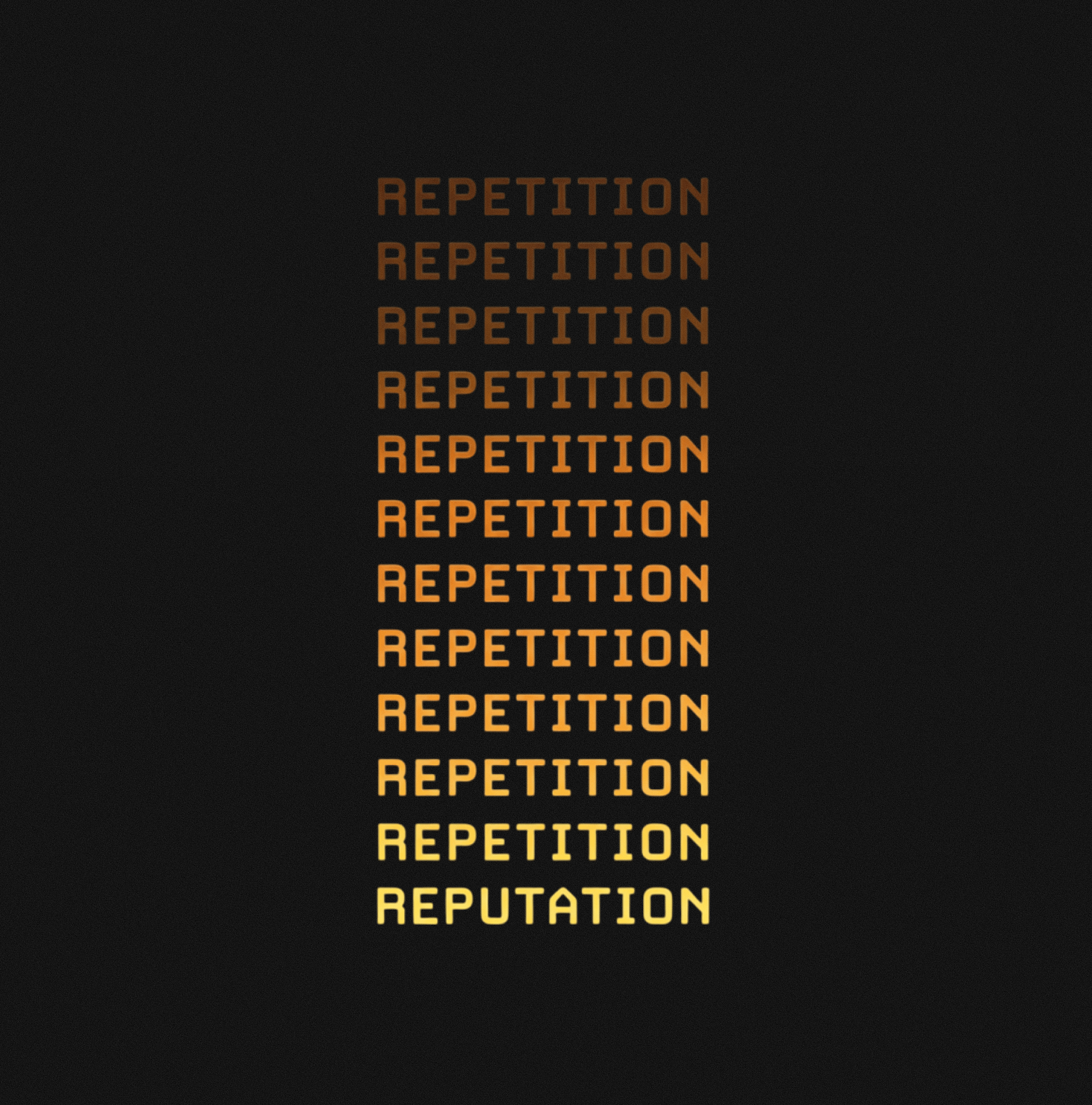
One Message, Infinite Variations
This doesn't mean saying the identical same thing repeatedly. That's just spam.
It means repeating the same idea through different lenses, formats, and contexts.
The simplest place to start = treat every investment announcement as a carrier signal for your thesis.
Most funds announce a deal and move on. Better funds use each announcement to reinforce the same 1-2 ideas about what they do and why.
Bedrock Capital coined "narrative violations" in their 2017 manifesto and haven't stopped saying it since. Every investment post reinforces the concept. Every podcast appearance asks "What narrative are you violating?" Every partner bio echoes it. Seven years later, founders approach them saying "I think I have a narrative violation for you." The phrase is now part of VC vernacular.
So when the NYT went to write about Narrative Violations too… Guess who got a quote…

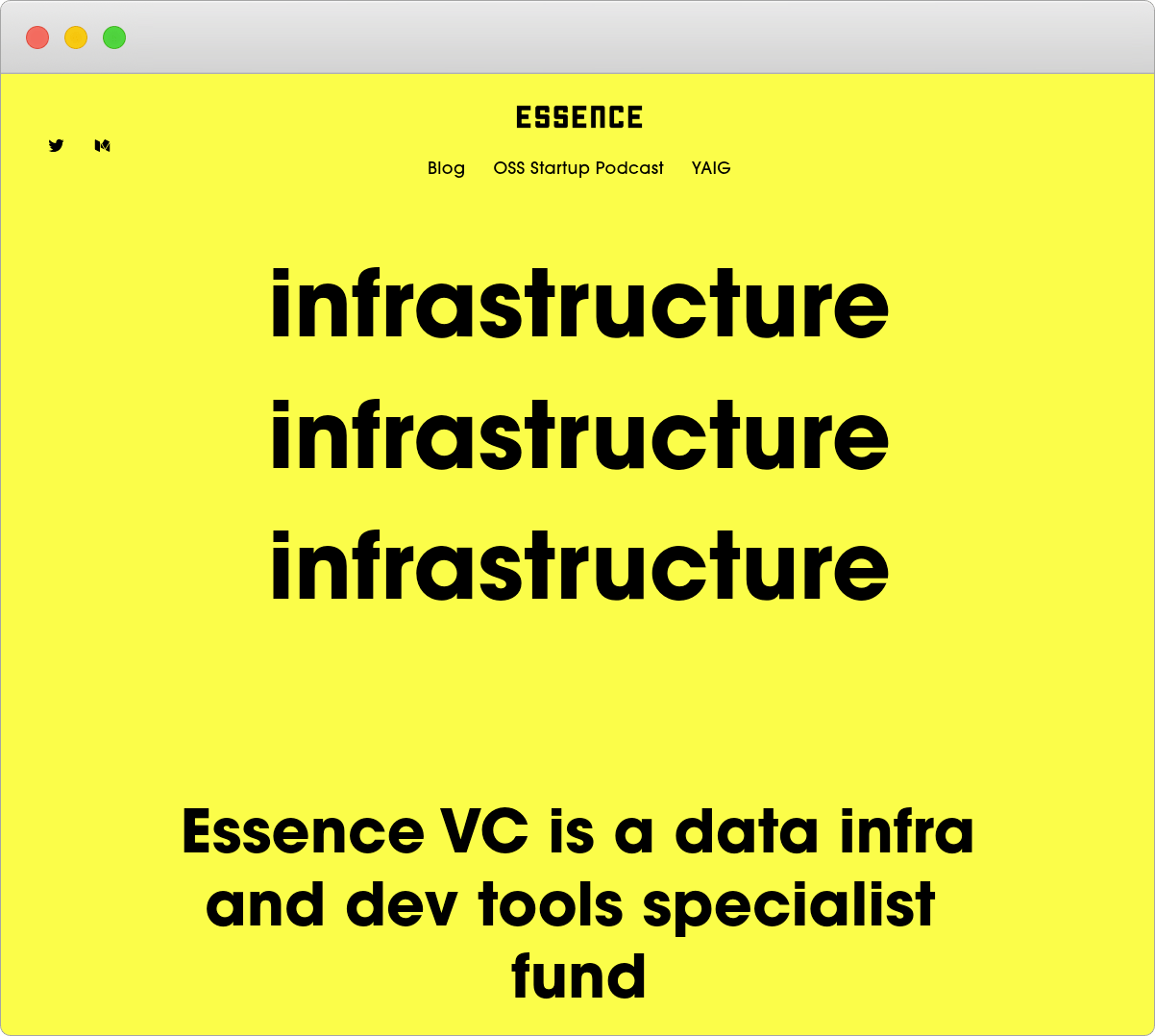
Essence VC says "infrastructure" so relentlessly it's almost comical.
Their website hero says it three times. Their podcast? "The Infra Pod." Every investment announcement dedicates a section to infrastructure. Blog posts, open-source projects, all of it ties back to infrastructure.
Tim Chen, the solo GP, started as an angel hammering infrastructure deals on AngelList. Just kept showing up in the same space, backing the same type of founder, talking about the same thing. Eventually he closed a $41M fourth fund without even trying. And you guessed it… famed infrastructure and AI investor Martin Casado of Andreessen Horowitz came in as an LP.
Claro.
Why? Because when anyone thinks "infrastructure investing," they think Essence.
Here's how to do this:
Hardwire a "because we invest in X" line into every deal post. Not just "we're excited to back X" but "We backed X because it's exactly the kind of something specific software we believe will replace legacy ERPs for mid-market industrials."
Over time, people start associating you with "something specific software" not just "Seed investor in X.” …. of course, fill in your own blanks.
Always link back to an anchor asset. Pick one or two master pieces - your thesis essay, your market map, your framework. Every investment announcement should reference it: "This builds on our earlier thesis on X..." or pull one key idea and restate it in fresh language.
Bedrock's manifesto became their anchor. Virtually every subsequent piece references it. That's how repetition compounds instead of feeling repetitive.
Add a "pattern we're seeing" paragraph. Use each announcement to reinforce a pattern recognition… "This is our third investment in vertical developer tools for climate - and we're seeing the same thing again yadda yadda"
Even if readers don't remember prior deals, they remember that you see patterns in a specific niche.
Make the founder story serve the thesis. Instead of generic excitement, emphasise the trait that maps to your story. If your message is "we back technical outsiders," highlight the non-obvious credential. If it's "operators backing operators," highlight the founder's operating scar tissue.
Same human story, always tuned to the same idea.
Beyond announcements, the same message needs to show up everywhere: partner bios that echo the same focus areas, portfolio page groupings that reflect your thesis lens, event naming that reinforces your territory, social posts that stay in consistent content lanes.
Essence VC's podcast could have been called anything but it’s obviously called "The Infra Pod" because every touchpoint reinforces the same word.
If your thesis is "software infrastructure for climate tech," you could write: a thread about why climate needs better developer tools, a post analysing a portfolio company's technical architecture, a framework for evaluating infrastructure plays, a contrarian take on why hardware isn't enough, a data visualisation of cloud costs in climate companies.
All different content. All the same underlying message.
Each piece of content should reference and reinforce the others. This is how ideas compound (We explored this in How to Build Content Leverage and save hundreds of hours a year by systematising this).
And if you're struggling to make your message stick, also read How to Have Sticky Ideas - the name of your idea is just as important as the argument behind it.

The Audience Is Changing
"You are not advertising to a standing army. You are advertising to a moving parade."
Your best piece from 6 months ago? More than half of your current pipeline never saw it.
New LPs on the market. New founders start companies. New people follow you and they probably missed your greatest hits.
In practice … when we look at our clients' analytics, the majority of people seeing any given post are new followers or casual viewers who've never engaged before. Your "audience" isn't a stable group - it's constantly churning.
This means two things.
Stop thinking "I already posted this" and start thinking "new people are here now."
Systematically resurface your best content.
The simple system: Every quarter, look at your top 3 pieces from 6-12 months ago. Find a way to republish them - update the intro, add new data, change the format, reference recent news that proves the point. The core idea stays the same. The packaging is new.
Your content isn't just competing with other VCs' content today. It's competing with every other tab open, notification, every other thing demanding attention etc etc.
The half-life of a post is measured in hours… AND this isn't getting better. It's getting worse.
You will get bored of your message before anyone remembers it.
But that's not their problem. That's yours.
So say it again.
Laurie, Refinery Media
If you made it all the way through, thanks so much for reading! Several hundred VCs now open this every week. If it’s helped you think differently about marketing, Venture, or storytelling, please send it to someone in your orbit.
If you enjoyed this read more from our top posts: